
You are on eastlansinginfo.org, ELi's old domain, which is now an archive of news (as of early April, 2020). If you are looking for the latest news, go to eastlansinginfo.news and update your bookmarks accordingly!
You are on eastlansinginfo.org, ELi's old domain, which is now an archive of news (as of early April, 2020). If you are looking for the latest news, go to eastlansinginfo.news and update your bookmarks accordingly!
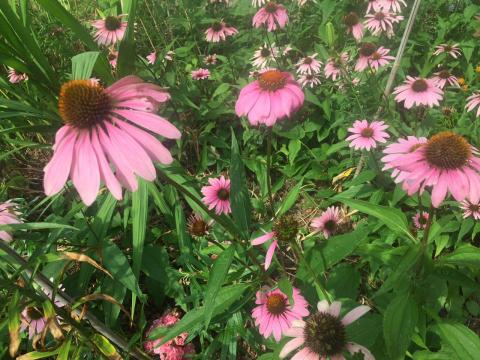
Echinacea
Native plants offer aesthetic appeal while providing many more environmental and time saving benefits compared to traditionally grown nursery plants.
Native plants provide much needed food and shelter for insects and wildlife and because they have evolved to survive Michigan’s ever-changing weather conditions, they do not require additional fertilizers, pesticides, frequent cuttings or watering once established.
Traditionally, flower beds are filled with the nearest nursery grown ornamental shrub or perennial purchased based on beauty and landscaping function, without much thought given to their ecological purpose. This results in very static yards with the same plants being used in nearly every landscape. This is a problem for Michigan pollinators and wildlife, as they require dynamic landscapes with a variety of plants and bloom times often not provided to the same extent by non-native plants. Song birds, butterflies, bees, and many other insects have adapted to using native plants for food and cover, and without them simply cannot survive.
While not all non-native species are harmful to Michigan’s ecosystems, some of them can cause serious, long-lasting problems. In general, non-native species are more aggressive and out-compete native species for resources (i.e., light, water, space, etc.). They also tend to grow faster and sooner than our native plants, crowding out other plants early in the growing season. While it may seem as though planting non-native plants in a landscape is safe because it is located in a backyard, many plant seeds are dispersed via wind and animals. It is virtually impossible to guarantee a plant will not spread when planted outside, even in a container.
Many non-native plants can easily be replaced by native Michigan species, offering the same aesthetic appeal while providing ecological benefits to pollinators and insects. Recently the Nature Conservancy launched “Plant This Instead of That: Alternatives to Garden Bullies,” offering native alternatives to aggressive plants and shrubs typically used in yards and gardens. The website covers the entire United States, and it provides USDA hardiness zones for each species to guide gardeners.
One of the species highlighted on the website is wintercreeper (Euonymus fortunei), a common groundcover used in urban landscapes. Wintercreeper is highly invasive, and grows vigorously, covering forest floors and even growing into trees. A simple and beautiful alternative is wild ginger (Asarum canadense), a species native to much of the Central United States. Wild ginger has large velvety leaves and can grow in shady or partially sunny locations, making it a simple and appealing replacement for wintercreeper.
“The best part about using native plants is knowing you are benefitting the environment. We know native pollinator populations are crashing across the country and even a small patch of native plants in a large landscape can provide important resources for local populations,” said Dr. Doug Pearsall, Senior Scientist with The Nature Conservancy in Michigan and longtime East Lansing resident.
According to the Michigan Department of Natural Resources there are over 1,800 plant species native to Michigan, providing critical habitat to insects and wildlife. “Native plants are easy to use in traditional landscapes, however homeowners must recognize the limitations of their yard, paying special attention to light conditions, soil types, and moisture,” advises Dr. Pearsall. “It is easiest to purchase native plants with a wide environmental tolerance and to inventory what is currently growing and finding native species with the same growing requirements.”
One of the many resources available online for homeowners interested in incorporating native plants into their landscapes is Michigan State University’s Native Plants and Ecosystem Services webpage. It features tips on replacing non-native plants with natives, plant factsheets, an extensive Michigan native plant list, and information on how many pollinators are likely to be attracted by specific native plants.
eastlansinginfo.org © 2013-2020 East Lansing Info